Four International Artists and Architects Present Art Pavilion Proposals
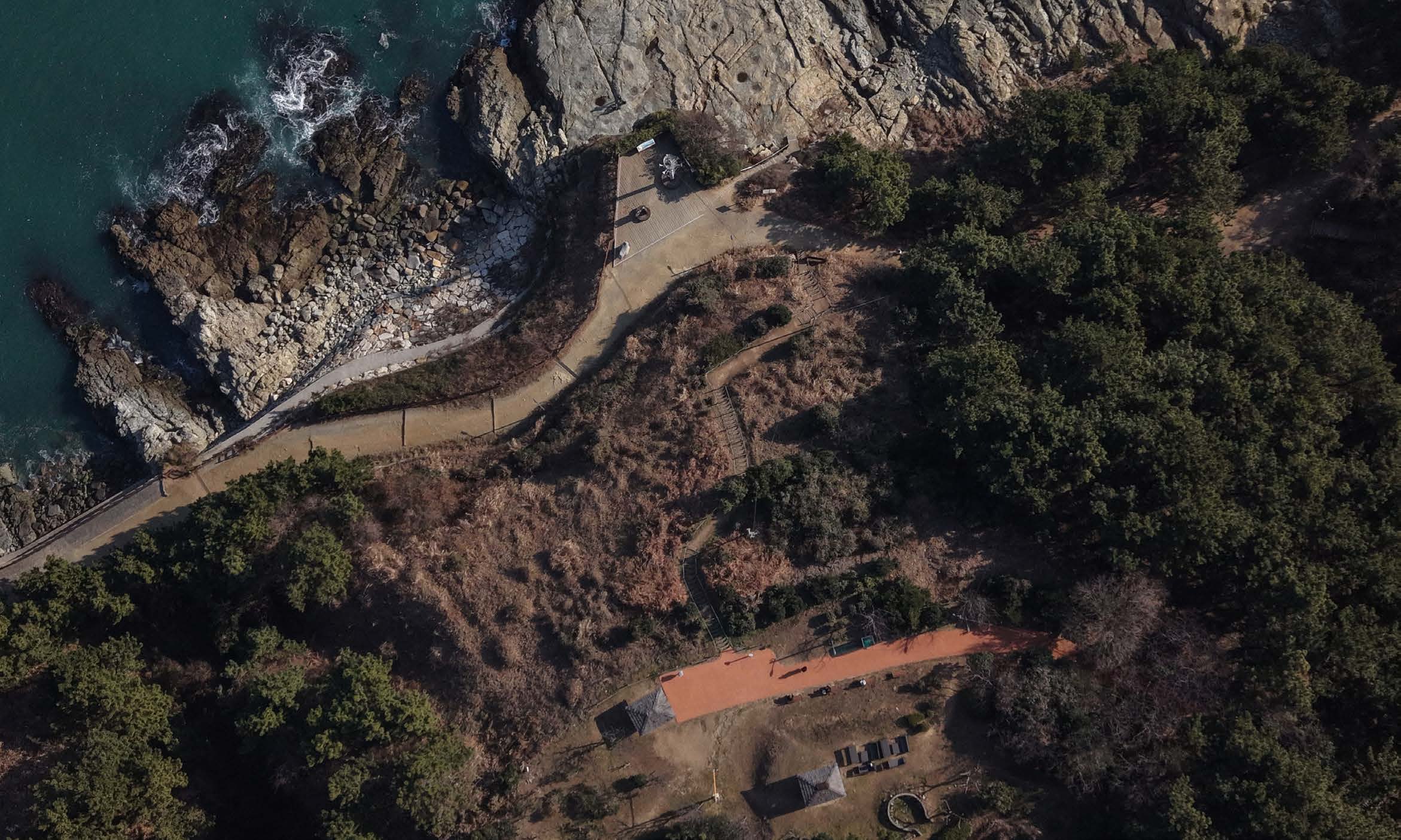
The Busan Igidae Art Pavilion brings together four internationally active artists and architects (or teams) to submit proposals for the Art Pavilion, in order to realize the vision and concept of the project.
Each participating artist will submit a proposal for the Art Pavilion that harmonizes with Busan's natural landscape.
Following the selection process, one final work will be selected.
Kimsooja is an artist who has elevated Korean motifs such as sewing and the bottari into a contemporary sculptural language, establishing herself at the forefront of the global art world. In 2013, she received widespread international acclaim for transforming the Korean Pavilion at the Venice Biennale into an immersive space of light. Her international standing has been further solidified through major honors, including the Order of Cultural Merit (Okgwan) from the Korean government and the Ordre des Arts et des Lettres (Officier), France’s highest distinction for contributions to arts and culture. Leading institutions such as the Bourse de Commerce in Paris, the Guggenheim Museum Bilbao, Centre Pompidou-Metz, and MoMA PS1 have focused on her work, recognizing her as a major figure who has expanded the horizons of contemporary art. Her practice begins with what may be described as an ‘immaterial form of sewing,’ in which light, space, and human breath are delicately interwoven. By applying light-diffusing films to architectural glass or installing reflective surfaces, she reconstructs the history and natural conditions of a site into a single, organic landscape. Viewers do not remain mere observers of the work, but become immersed in shifting variations of light over time, drawn into an intensified awareness of their own presence within the space.
Representative works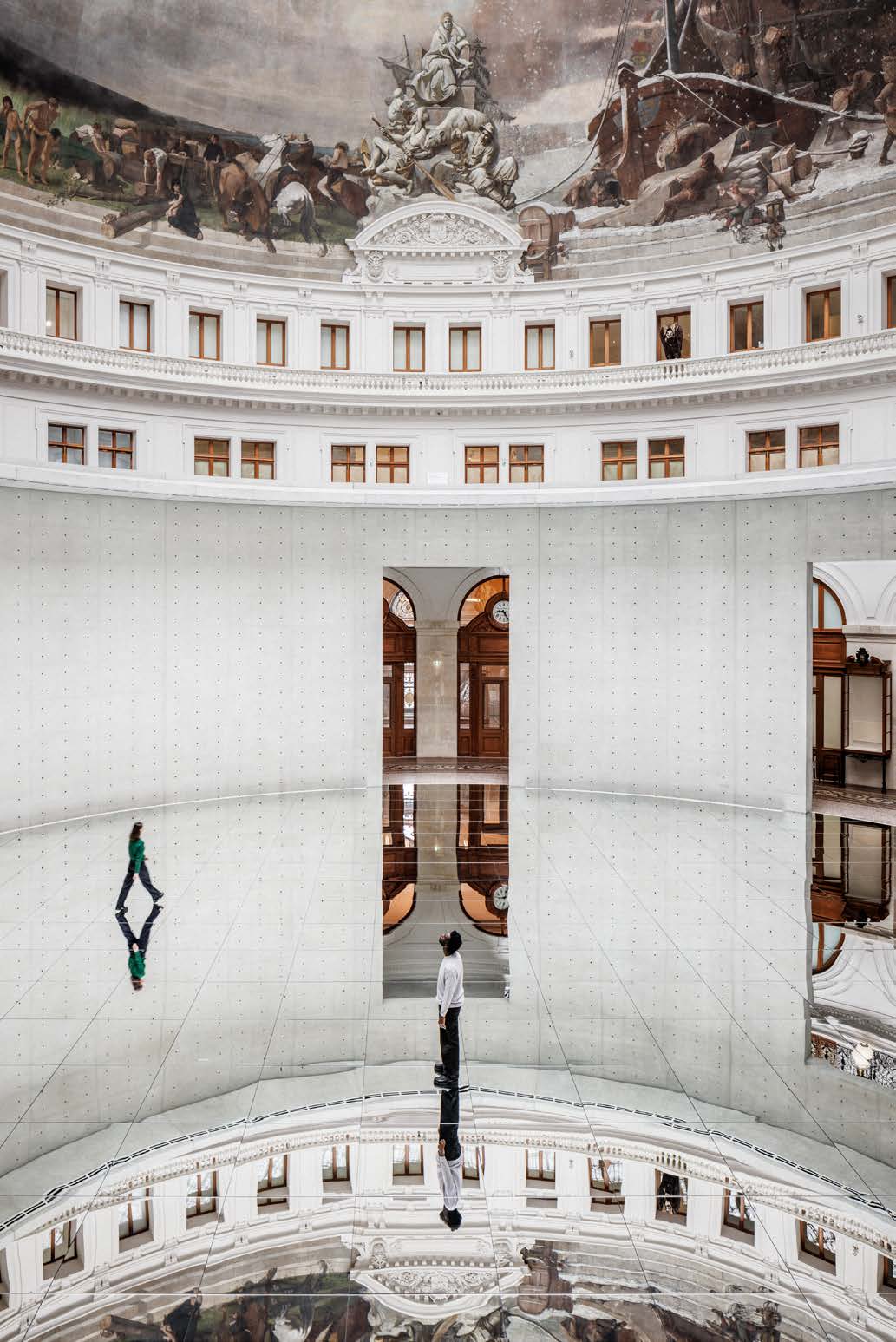
To Breathe–Constellation (2024, Paris, France)
To Breathe–Constellation is a large-scale installation that reveals a new relationship between light and space by introducing reflective materials into a historic architectural interior. Light reflected across the floor, walls, and ceiling shifts continuously in response to the viewer’s movement and the passage of time, creating a different scene with each moment of staying. As visitors walk through and pause within the space, the architecture is no longer experienced as something to observe, but as a place to inhabit and feel.
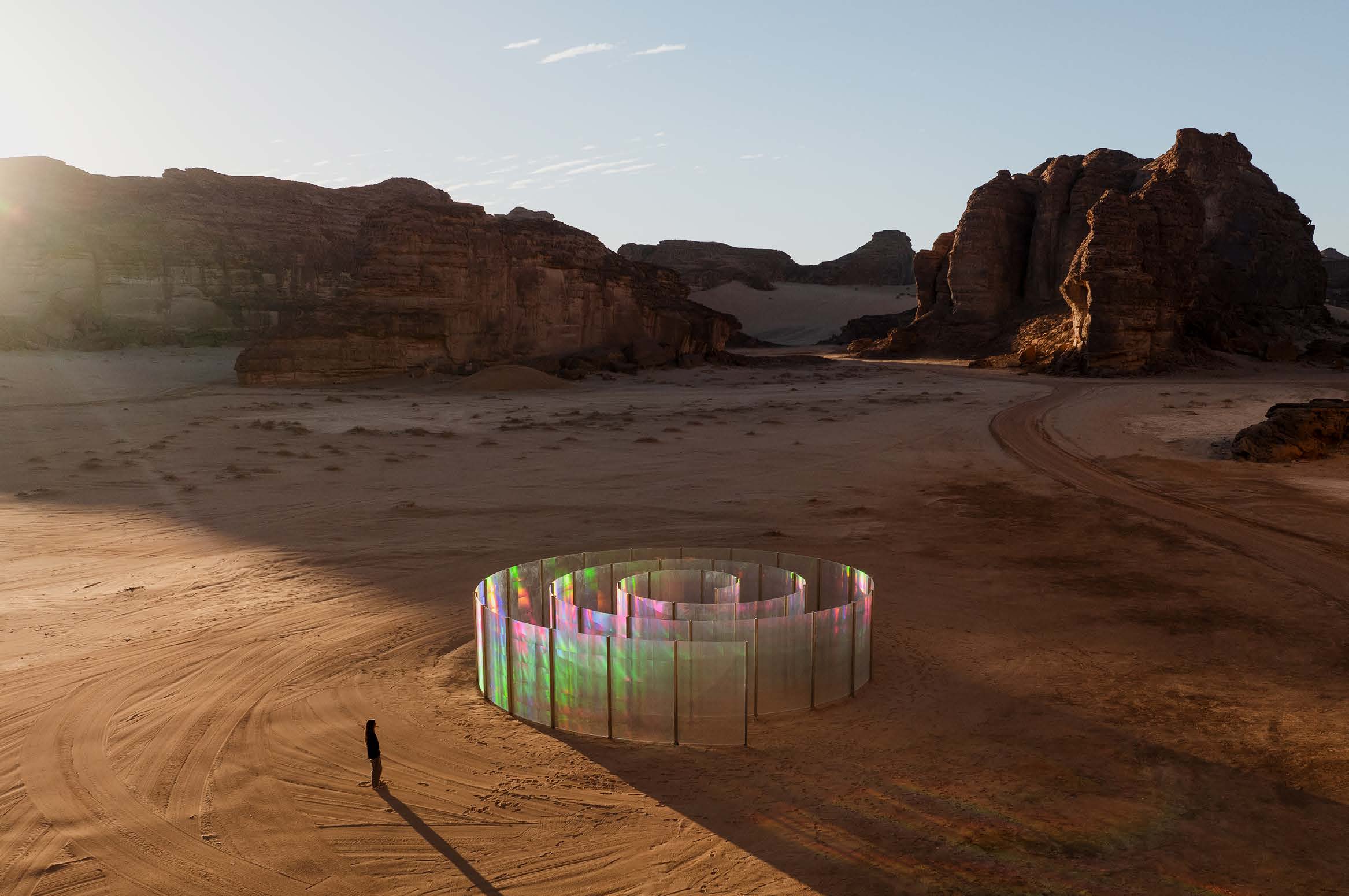
To Breathe–AlUla (2024, AlUla Desert, Saudi Arabia)
Installed in the middle of the desert, this work uses a transparent structure that allows light and the surrounding landscape to be reflected across its surface. The color and atmosphere of the work change dramatically depending on the time of day, weather, and light conditions, blurring the boundary between the natural environment and the constructed form. As visitors move through and around the installation, they experience wind, light, and landscape together, often feeling as though they have become part of the surrounding environment. This work is a representative example of how Kimsooja explores ways people can stay within public spaces and reencounter nature through light and presence.
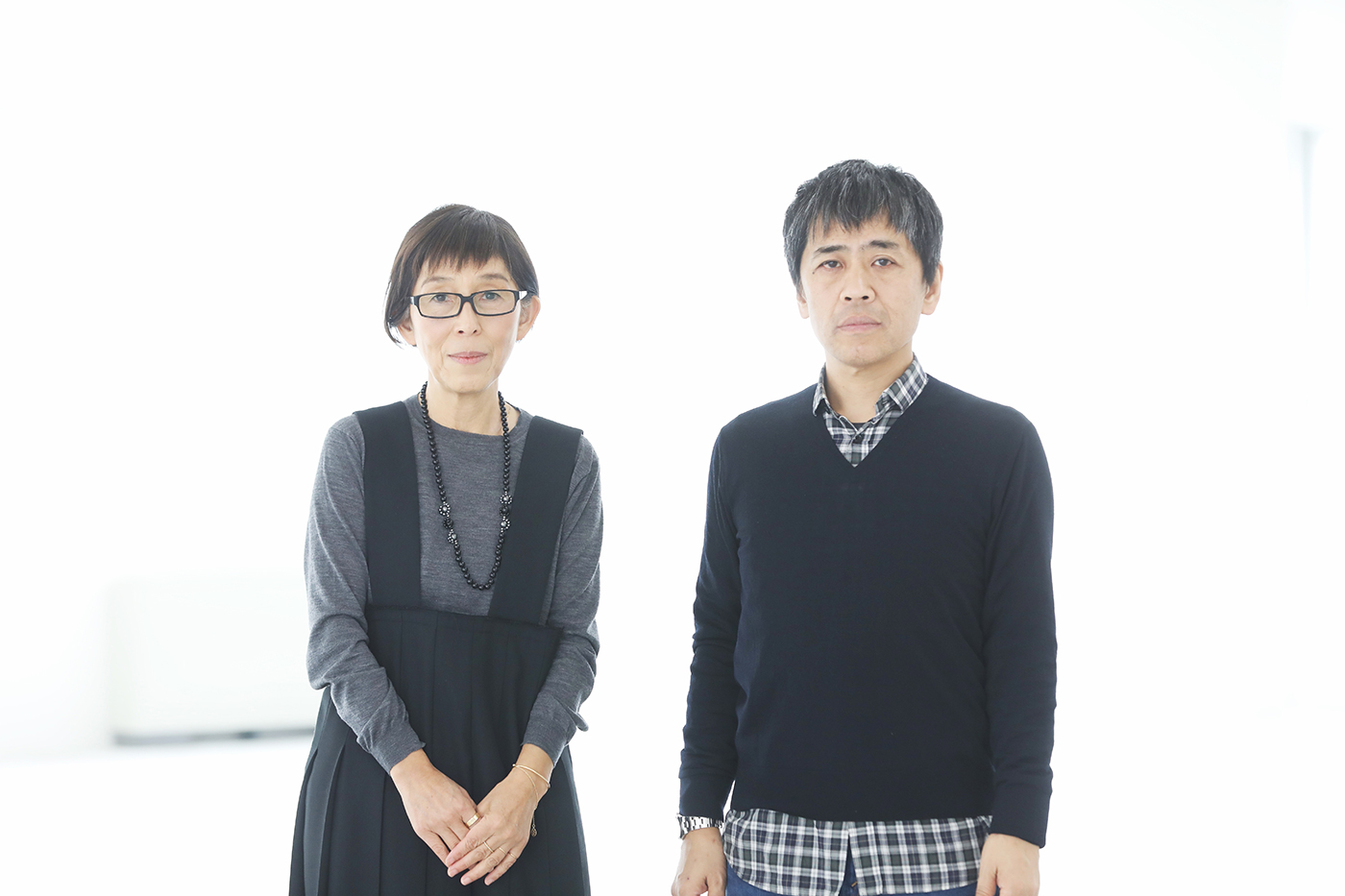
SANAA is an architecture studio led by Japanese architects Kazuyo Sejima and Ryue Nishizawa, and is regarded as one of the most highly respected teams in contemporary architecture. They have received the Pritzker Architecture Prize, often described as the Nobel Prize of architecture, as well as the Golden Lion at the Venice Architecture Biennale and the RIBA Royal Gold Medal awarded by the British monarchy. SANAA is known for prioritizing how people naturally walk, move, and linger in space, and for creating architecture that gently connects buildings with nature, and interiors with exteriors.
Representative works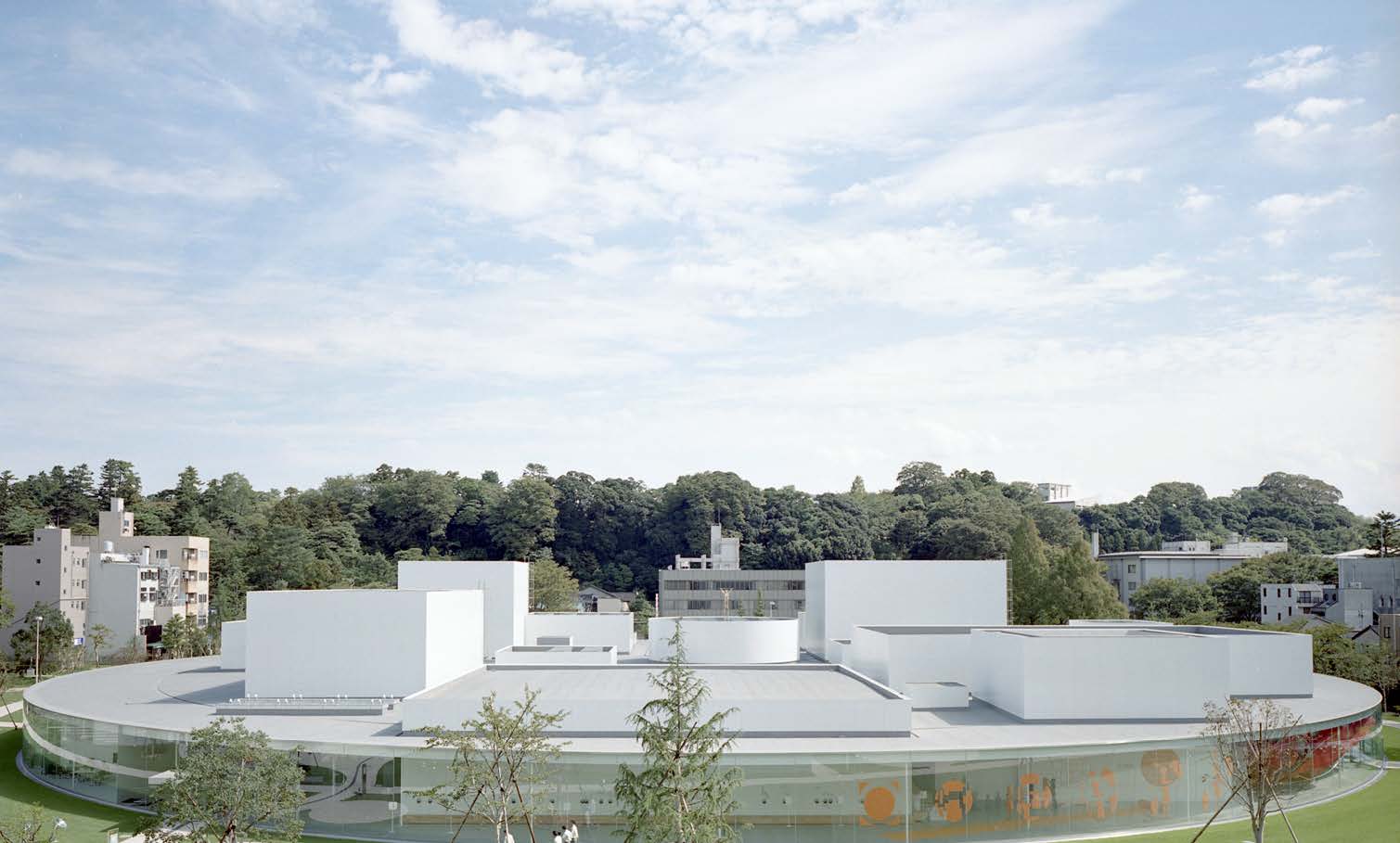
21st Century Museum of Contemporary Art (2004, Kanazawa, Japan)
The 21st Century Museum of Contemporary Art is a modern art museum composed of a gently circular plan and a transparent glass façade. Rather than functioning as a closed box separated from the city, the building was conceived as an open structure that anyone can enter freely, much like a public park. The exhibition rooms are distributed without a fixed route, allowing visitors to choose their own paths and experience the space at their own pace. Through this project, SANAA proposed the museum not as a building for passive viewing, but as a public environment where everyday movement and moments of pause flow naturally together.
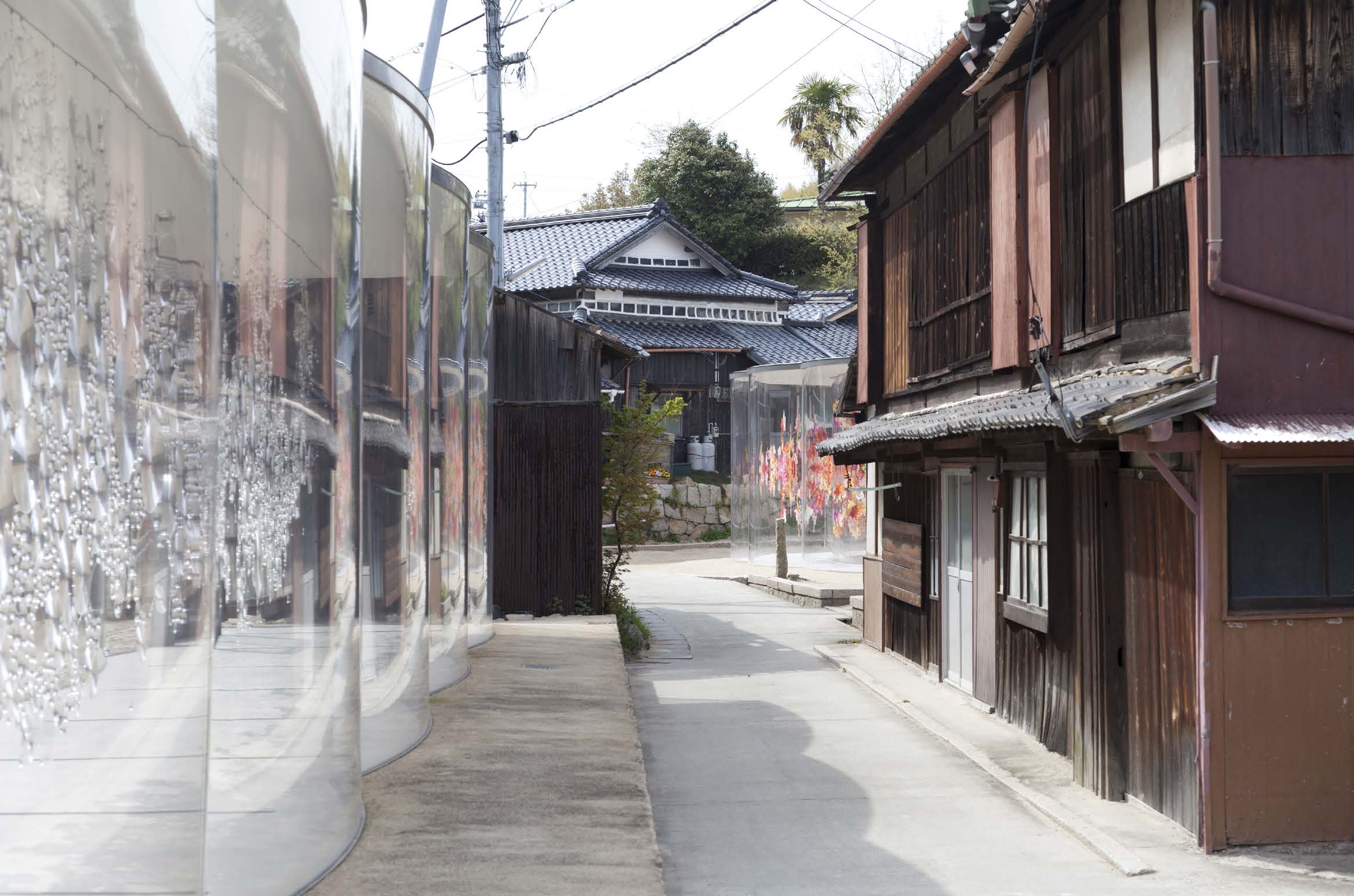
Inujima Art House Project (2013, Inujima Island, Japan)
The Inujima Art House Project is a regional regeneration initiative that transformed vacant houses on the small island of Inujima in the Seto Inland Sea into art spaces. Preserving the original structures while introducing minimal architectural interventions, the project was designed to allow art and daily life to coexist seamlessly. Rather than standing out as new constructions, the buildings quietly blend into the village landscape, inviting visitors to experience the spaces as they would walk through narrow island alleys. Through this project, SANAA presented architecture not as an isolated object, but as a mediator connecting memory, place, and the rhythms of everyday life. It stands as a representative example of how art and architecture can restore local temporality and community.
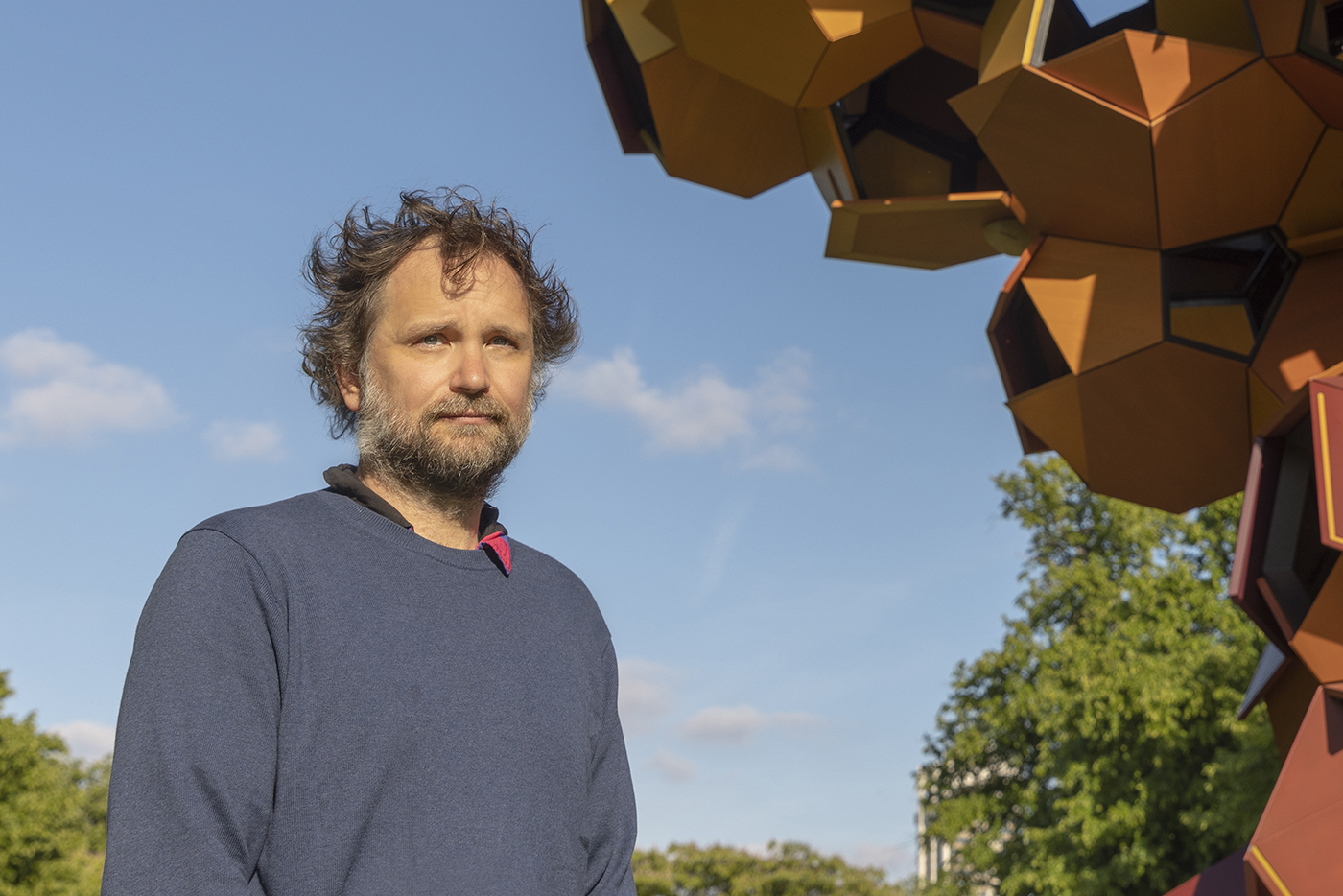
Tomás Saraceno is a contemporary artist internationally recognized for connecting nature, science, and art. His practice investigates spider structures and ecosystems, air currents, clouds, and atmospheric phenomena, combining artistic experimentation with scientific research. He has collaborated with scientists from institutions including MIT, the Max Planck Institute, and leading aerosol research centers. His work has been presented at major institutions worldwide, including the Serpentine Galleries in London, Palais de Tokyo in Paris, the Metropolitan Museum of Art in New York, and the Venice Biennale, where he represented Argentina in 2009. He is regarded as a leading international artist who has expanded discourse at the intersection of art and the environment. By translating environmental and atmospheric research into artistic language, he proposes new spatial concepts that move beyond a human-centered worldview.
Representative works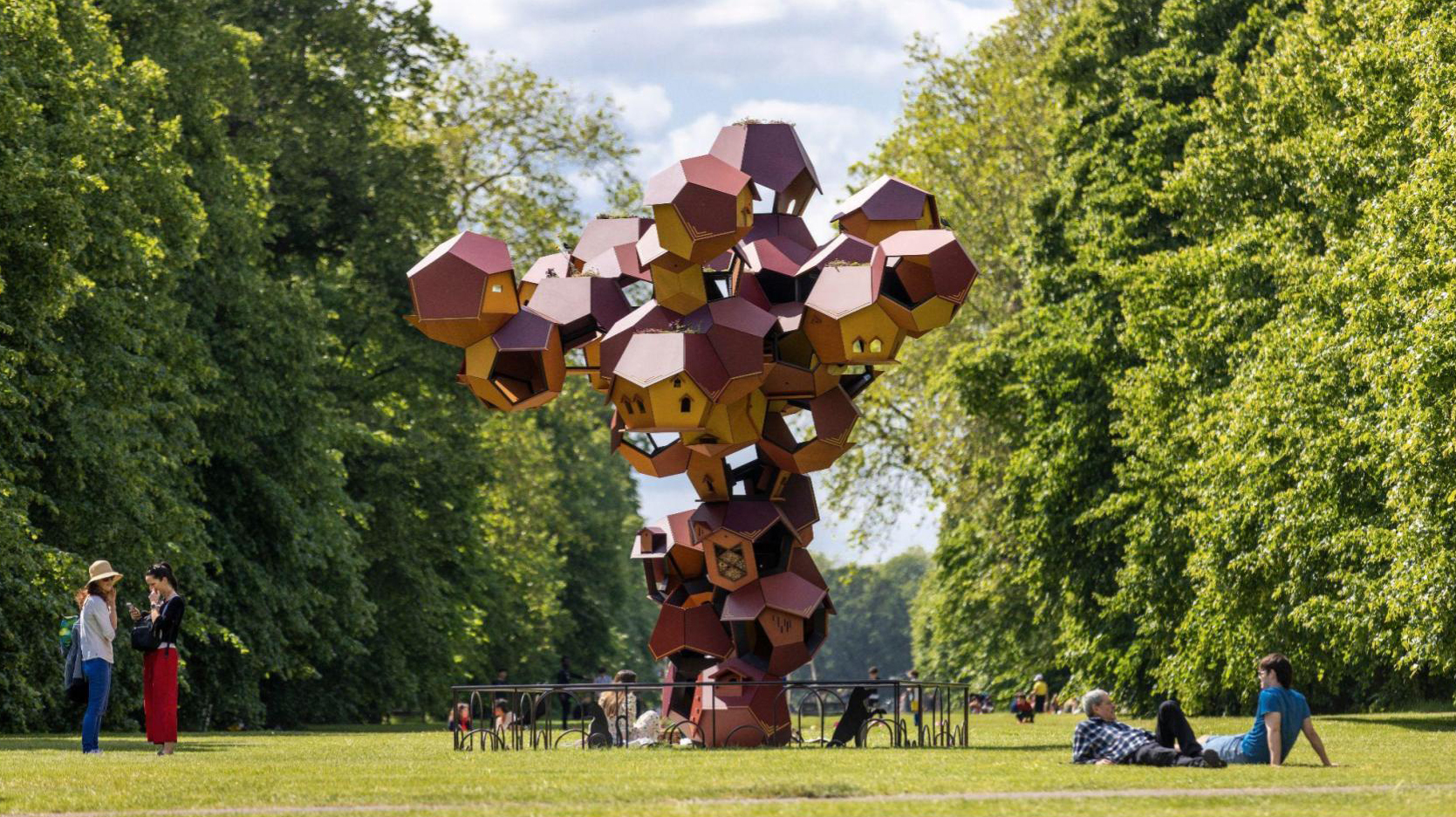
Cloud Cities: Species of Spaces and Other Pieces (2023, London, UK)
Cloud Cities: Species of Spaces and Other Pieces is a large-scale installation presented at the Serpentine Galleries in London. The project begins with the question, “Is the city a space exclusively for humans?” The structure consists of interconnected polyhedral modules that resemble bird nests, forming a clustered composition that evokes multiple habitats gathered within a tree canopy. Through this work, Saraceno challenges conventional human-centered architectural models and proposes imagined habitats where birds, insects, and diverse life forms might coexist. Standing beneath the installation, viewers look upward at the structure and are prompted to reconsider the meaning of the “city” as something shared rather than owned. The work demonstrates how art can expand ecological imagination and reshape our understanding of collective space.
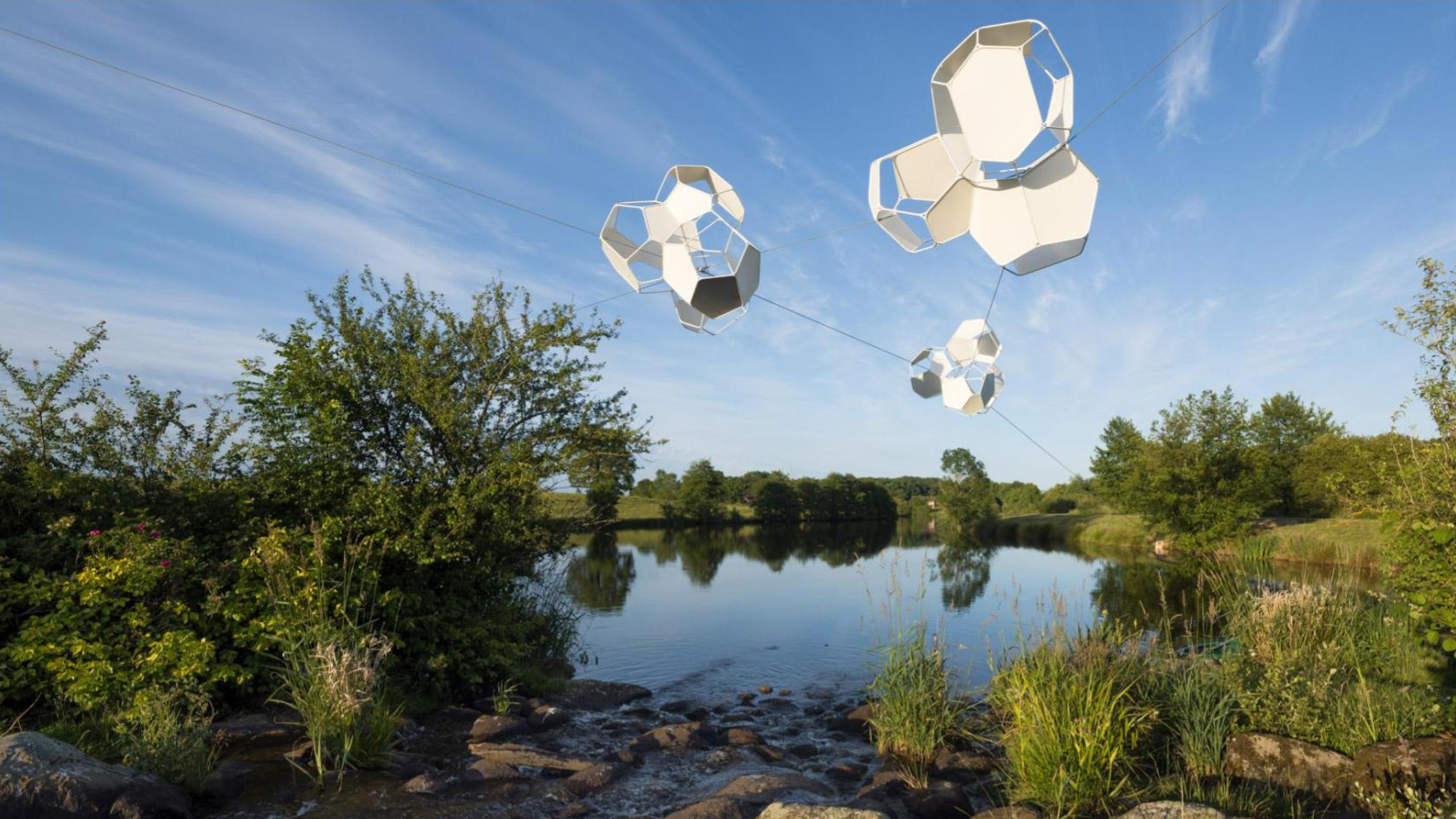
Cloud Cities: du sol au soleil (2022, Massignac, France)
Installed within a natural landscape in France, Cloud Cities: du sol au soleil features polyhedral structures suspended in the air and connected by slender cables, appearing like clouds floating against the sky. Inspired by the tensile principles of spiderwebs and aerodynamic systems, the installation creates a new spatial relationship between ground and atmosphere. As suggested by its title, “from the ground to the sun,” the work invites us to imagine ourselves not as beings fixed to the earth, but as part of a larger atmospheric environment. By encouraging viewers to look upward and reengage with sky and landscape, Saraceno extends architectural thinking beyond gravity-bound structures and toward the possibility of inhabiting air and atmosphere as living space.
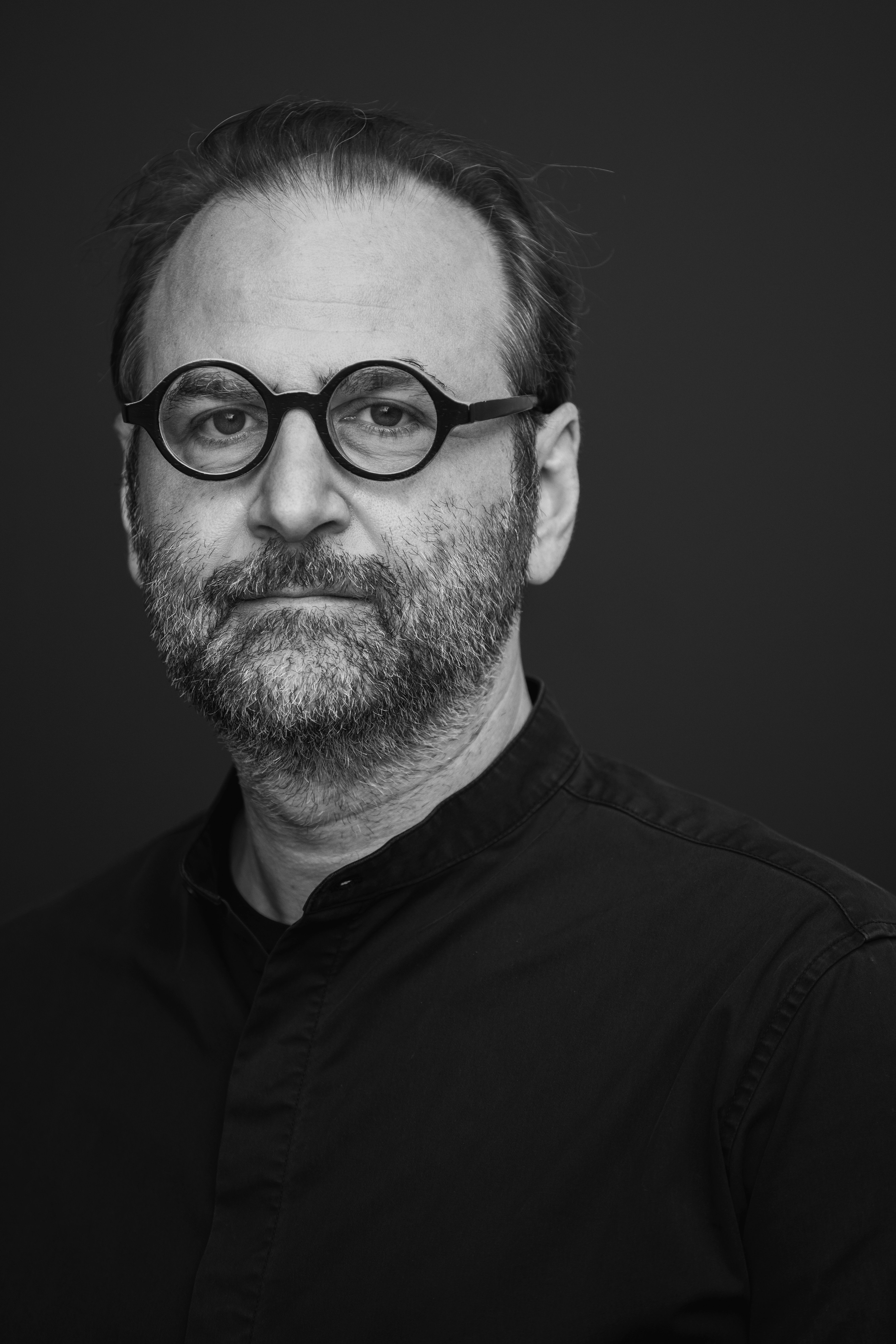
Wael Al Awar is a Lebanese architect and co-founder of the multidisciplinary architecture studio waiwai. He gained international recognition as a co-curator of the UAE National Pavilion project that received the Golden Lion, the highest award in the national pavilion category, at the 2021 Venice Architecture Biennale, one of the most prestigious events in global architecture. Rather than starting with striking forms, Al Awar is known for designing spaces based on environmental conditions such as soil, climate, and material properties. His work is highly regarded for addressing the relationship between environmental issues and architecture through tangible spaces and materials.
Representative works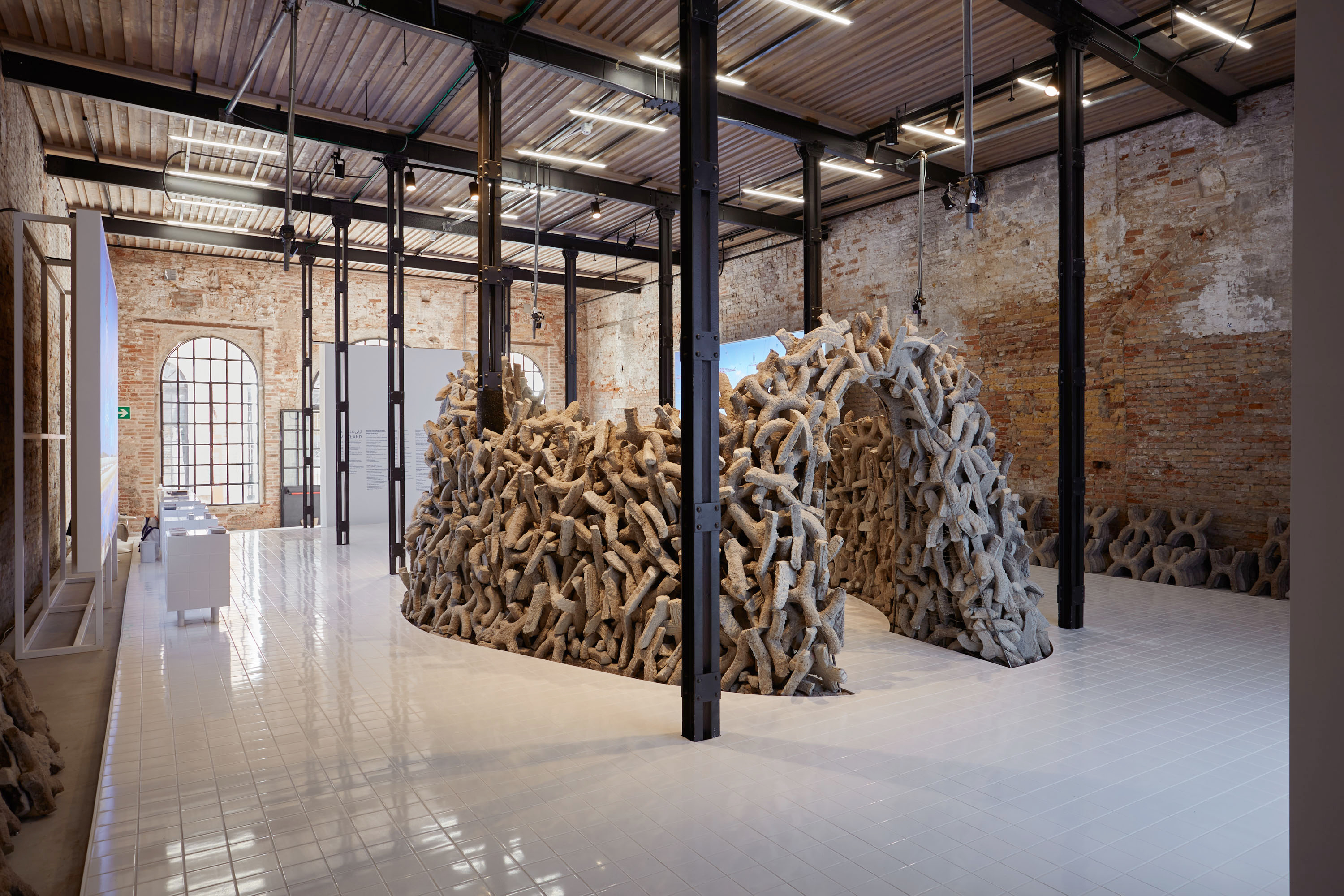
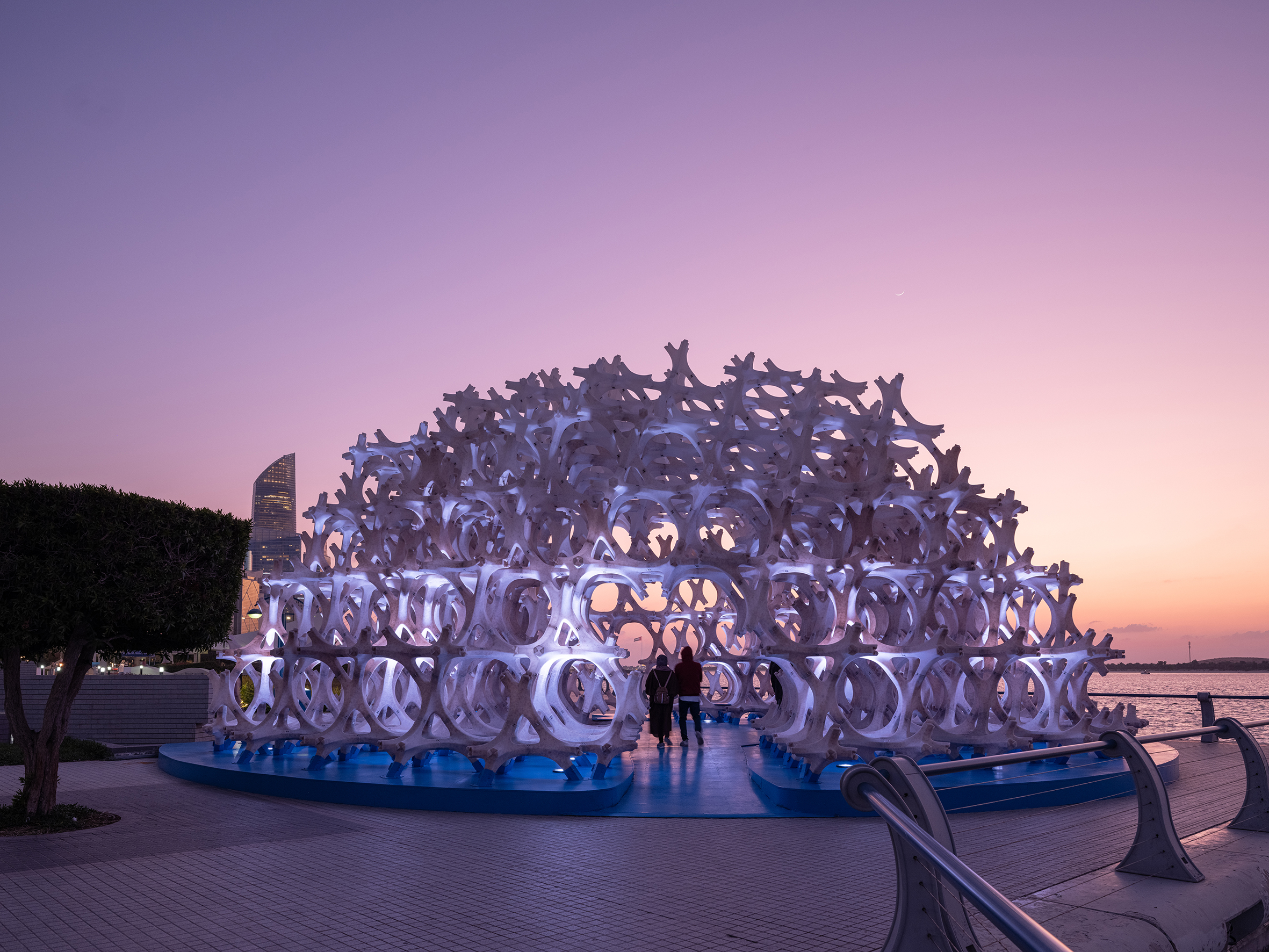
BARZAKH (2024, Abu Dhabi, UAE)
BARZAKH is an installation structure created using recycled plastic, palm fibers, and brine, a byproduct of the desalination process. The title refers to a "middle zone" where different worlds meet, a concept that Al Awar translates into both material and structure. As visitors move through the work, they directly experience light, shadow, and material textures, encountering new ways in which architecture and environment intersect. This project presents a vision for future architecture grounded in local conditions and resources.
WETLAND (2021, Venice Architecture Biennale)
WETLAND is a project that reinterprets brine, previously considered industrial waste, as a building material. Presented at the UAE National Pavilion at the Venice Architecture Biennale, the work went beyond explanation to propose usable alternative construction materials and structures. As a result, the UAE Pavilion received the Golden Lion for best national participation. This project clearly shows how architecture can serve as a practical and tangible response to environmental challenges.
Host & Project Authority:
Park & Leisure Policy Division, Busan
Metropolitan City
Project Implementation & Administration:
Sigongtech Co., Ltd.


