From a Vista to a Sanctuary: A Place to Dwell by the Sea
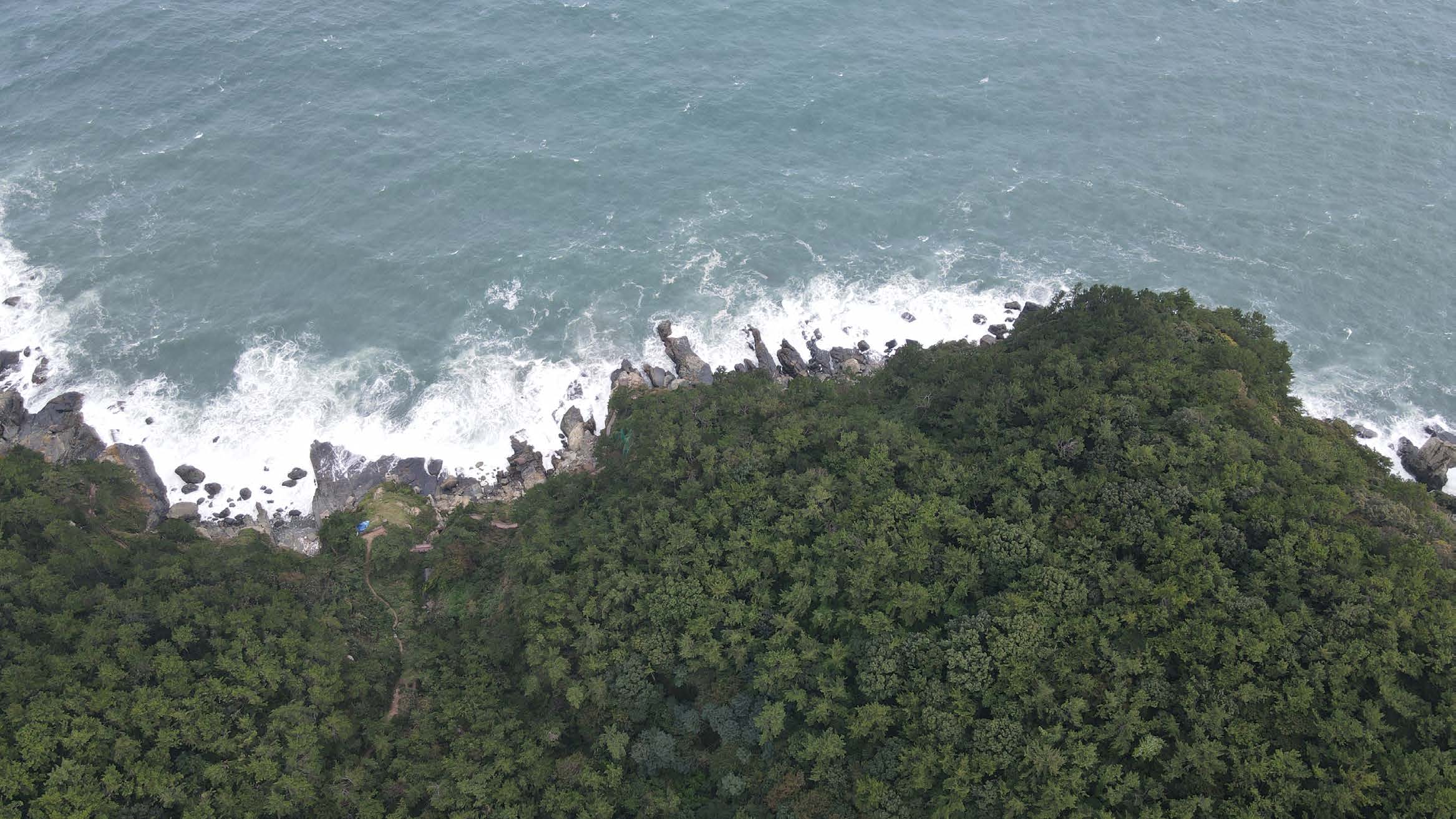
Situated along the Igidae coastline, the Busan Igidae Art Pavilion seeks to introduce a new spatial dimension to this familiar seascape. It is a place designed for citizens to step inside, linger, and reclaim their moments within the quiet passage of time.
This project transcends the mere installation of a sculptural object. It proposes a meaningful public space within one of Busan's most iconic natural landscapes, where architecture responds intuitively to the coastal environment while remaining deeply woven into the fabric of everyday life.
Rather than acting as a conventional viewing platform, the pavilion is conceived as a place to pause mid-walk, to find brief shelter from the elements, to witness the shifting gradients of a sunset, or to share unhurried conversation. Ultimately, the Busan Igidae Art Pavilion evolves beyond a site for observing the sea, aspiring to be a place where the rhythm of daily life gently settles into the coastal landscape of Igidae.
An open public structure where architecture and art converge
In cities worldwide, these pavilions—set in parks, along coastlines, and in urban squares—serve as both relaxing retreats for citizens and iconic landmarks for the city.
Pavilions are characterized by the following qualities:
-
An accessible structure open to everyone

-
A design that responds to and harmonizes with the natural environment

-
A space that combines artistic expression with architectural experimentation

The sauna pavilion Löyly, located along the Helsinki waterfront, has become a place people regularly visit and meet through everyday use, transforming the surrounding shoreline into a living space where people sit, walk, and enjoy the sea.
- Approximately 400,000 annual visitors
- Listed in Time's 100 Greatest Places (2018)
- Catalyst for a surrounding 30,000-resident residential and park development plan
The carousel pavilion Jane's Carousel in Brooklyn Bridge Park functions as a natural focal point for visitors, extending the surrounding waterfront into a place for walking, gathering, and leisurely activities.
- Approximately 5 million visitors annually
- Winner of the Travel + Leisure Best Public Space Design Award (2012)
- Since its installation, the area has grown into one of New York's leading cultural and commercial hubs
These examples collectively prove that even without massive scale or commercial intent, a structure designed for 'lingering' within nature can shape a city's identity and collective memory.
The Busan Igidae Art Pavilion emerges from this global movement of public art & architecture, designed in harmony with the unique landscape of Igidae.
Woven naturally into the paths of everyday life, it serves as a unique space for rest—a quiet intervention in the rhythm of the city.
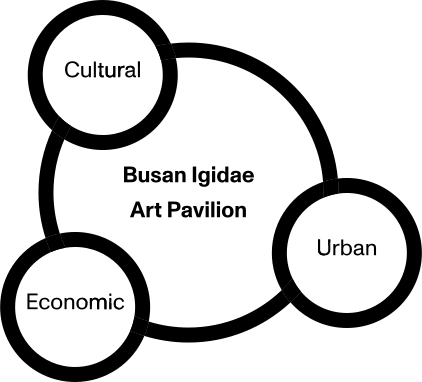
Cultural, Economic, and Urban Impact
Beyond the installation of a single structure, this project is designed to generate tangible impacts and long-term value as follows.
1. Enhancement of City Brand Value
Public projects involving world-class artists and architects serve as a catalyst for elevating a city's cultural profile. Global precedents show that such collaborations consistently drive tourism, expand media exposure, and revitalize the city's brand.
For Busan, this project provides a pivotal opportunity to reinforce its identity as a premier maritime city and solidify its standing as a global hub of culture.

2. Revitalization of Tourism and the Local Economy
Public art landmarks act as vital anchors that encourage visitors to linger. By shifting the experience from simple sightseeing to active ‘dwelling,’ these structures create a positive ripple effect on local businesses and tourism circuits.
The establishment of a cultural landmark is expected to:
- Increase the length of visitor stays

- Grow revisit rates

- Expand regional tourism content and experiences

3. Expanding Cultural Access
The Busan Igidae Art Pavilion is conceived as a public space where architecture and art of international caliber can be experienced as part of everyday life, without the barrier of admission fees.
As people naturally use the space while walking and resting, these everyday moments accumulate over time.
Through this continued use, the Igidae Art Pavilion becomes both a place for civic rest and a lasting public asset, forming an enduring part of the city's coastal landscape.